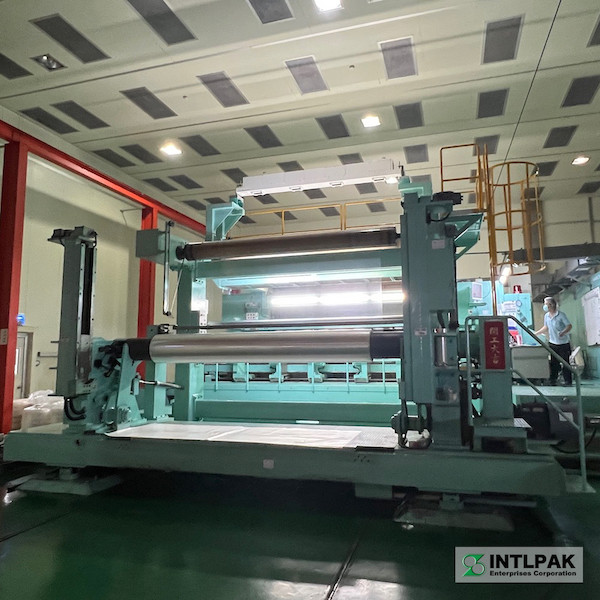
Product Photo
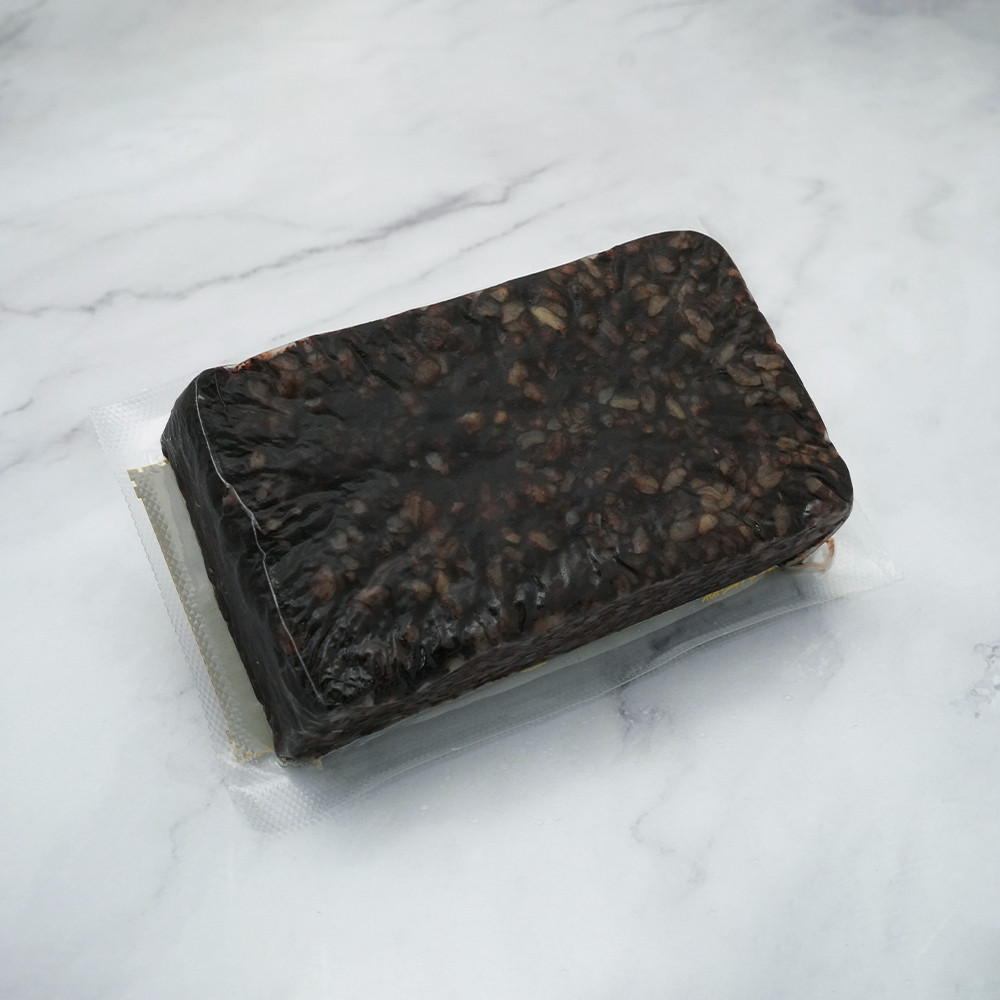
Nylon Thermoforming Film — Food Package
NL120 NY/PE thermoforming film for food vacuum thermoforming packaging, with a corona-treated surface for easier print and lamination bonding. Laminates with PET or OPP film to form a vacuum bag for chicken, ham, sausage, bacon, duck, meat, and seafood. Suggested forming depth 10–30mm.
A Mid-Gauge Film for Wide-Ranging Draw Depths
F2615 is the 120μm grade in Intlpak's NL series, rated across a wide 10–30mm forming-depth range — a versatile mid-gauge for lines running several product formats without a film change. Unlike the thinner F2646 and F2624 grades it carries a corona-treated NY surface, improving ink adhesion and lamination bonding, and it holds the family's best formability and pinhole resistance.
Where F2615 Is Used
- 1 Vacuum packaging film for refrigerated and frozen food, 10–30mm forming depth
- 2 Fresh beef, chicken, pork, seafood, sausage, and fresh meat products
- 3 Ham, bacon, duck, and other ready-to-eat and processed meats
- 4 Mixed-format lines packing both shallow trays and moderately deep cuts
- 5 Food vacuum thermoforming packaging equipment
Full Specifications — Thermoforming Nylon/PE Film Series
F2615 is the 120μm, 10–30mm forming-depth grade in Intlpak's NL nylon/PE thermoforming film family. The table below shows F2615 alongside the other gauges in the same series.
| Property | Standard | Unit | F2646 (50μm) | F2624 (80μm) | F2615 (120μm) | F2606 (150μm) | F2647 (180μm) | 15309 (262μm) |
|---|---|---|---|---|---|---|---|---|
| Thickness | — | μm | 50 | 80 | 120 | 150 | 180 | 262 |
| Yield Point (MD) | ASTM D882 | kg/cm² | 150 | 150 | 130 | 180 | 160 | N/A |
| Yield Point (TD) | ASTM D882 | kg/cm² | 150 | 150 | 140 | 170 | 130 | N/A |
| Break Point (MD) | ASTM D882 | kg/cm² | 450 | 460 | 320 | 430 | 400 | N/A |
| Break Point (TD) | ASTM D882 | kg/cm² | 380 | 470 | 330 | 450 | 430 | N/A |
| Elongation (MD) | ASTM D882 | % | 370 | 480 | 450 | 510 | 620 | N/A |
| Elongation (TD) | ASTM D882 | % | 440 | 550 | 500 | 560 | 600 | N/A |
| Tensile Modulus 2% (MD) | ASTM D882 | kg/cm² | 2400 | 2400 | 2400 | 3400 | 3400 | 4000 |
| Tensile Modulus 2% (TD) | ASTM D882 | kg/cm² | 2100 | 2300 | 2300 | 3000 | 3200 | 4500 |
| Static C.O.F. (treated) | ASTM D1894 | kg/200g | N/A | N/A | N/A | N/A | N/A | 0.10 |
| Static C.O.F. (untreated) | ASTM D1894 | kg/200g | 0.08 | 0.08 | 0.09 | 0.09 | 0.09 | 0.10 |
| Kinetic C.O.F. (treated) | ASTM D1894 | kg/200g | N/A | N/A | N/A | N/A | N/A | 0.08 |
| Kinetic C.O.F. (untreated) | ASTM D1894 | kg/200g | 0.07 | 0.08 | 0.08 | 0.09 | 0.08 | 0.09 |
| Haze | ASTM D1003 | % | 4 | 5.7 | 10 | 12.5 | 15 | 20 |
| Corona-Treated Surface | — | — | N/A | N/A | NY | NY | NY | NY |
| Suggested Forming Depth | — | mm | — (sealing film) | 10–15 | 10–30 | 40–50 | 60–70 | 60–100 |
| Width | — | — | Customized | |||||
| Length | — | — | Customized | |||||
Reviewed by: Intlpak R&D Team.
Why F2615 Performs
Storage Notice
Avoid exposure to direct light, wind, and rain — store under appropriate conditions. Prevent products from slipping from high places, being polluted, or being impacted during handling.
Quality & Certification
Manufactured under ISO 9001 quality management and GMP clean-room production, with ISO 22000 & HACCP food-safety certification. All products undergo annual safety checks.
Questions About F2615
F2615 is rated 10–30 mm — how deep can it really go?
30 mm is the recommended ceiling, and near it you should measure corner wall thickness rather than assume. The range covers most standard meat trays; beyond 40 mm move to F2606 (150 μm, 40–50 mm), and past 60 mm you are in F2647 (180 μm) or 15309 (262 μm) territory.
F2615 has the family's lowest yield point at 130/140 — is it too soft?
That softness is what deep draw needs. A low yield point means the web enters ductile stretch early and conforms to the tooling instead of resisting and then tearing. The trade-off is web tension discipline — too much and machine-direction stretch pulls seal position and cavity dimensions out of tolerance.
Which face of F2615 is corona treated?
The NY (nylon) face, prepared for printing or lamination, with the other face left for sealing behaviour. Confirm reel orientation before running: presenting the wrong face directly affects ink adhesion or bond strength. If your converting sequence is unusual, confirm winding direction with sales at order stage.
F2615's haze of 10% is double F2624's — is that worth it?
It is, if you need more than 15 mm of draw. F2624 is clearer at 5.7% but stops at 15 mm; F2615 trades optics for 30 mm of forming capability. Use F2624 for shallow trays and pay the clarity cost only when the cavity demands it.
What food packs use F2615?
Food vacuum thermoforming across ambient, chilled and frozen distribution. Typical work is mid-depth meat trays, portioned prepared foods, cheese and processed products — formed as the bottom web then sealed to a top web under vacuum, with the nylon layer supplying toughness and pinhole resistance.