Product Photo
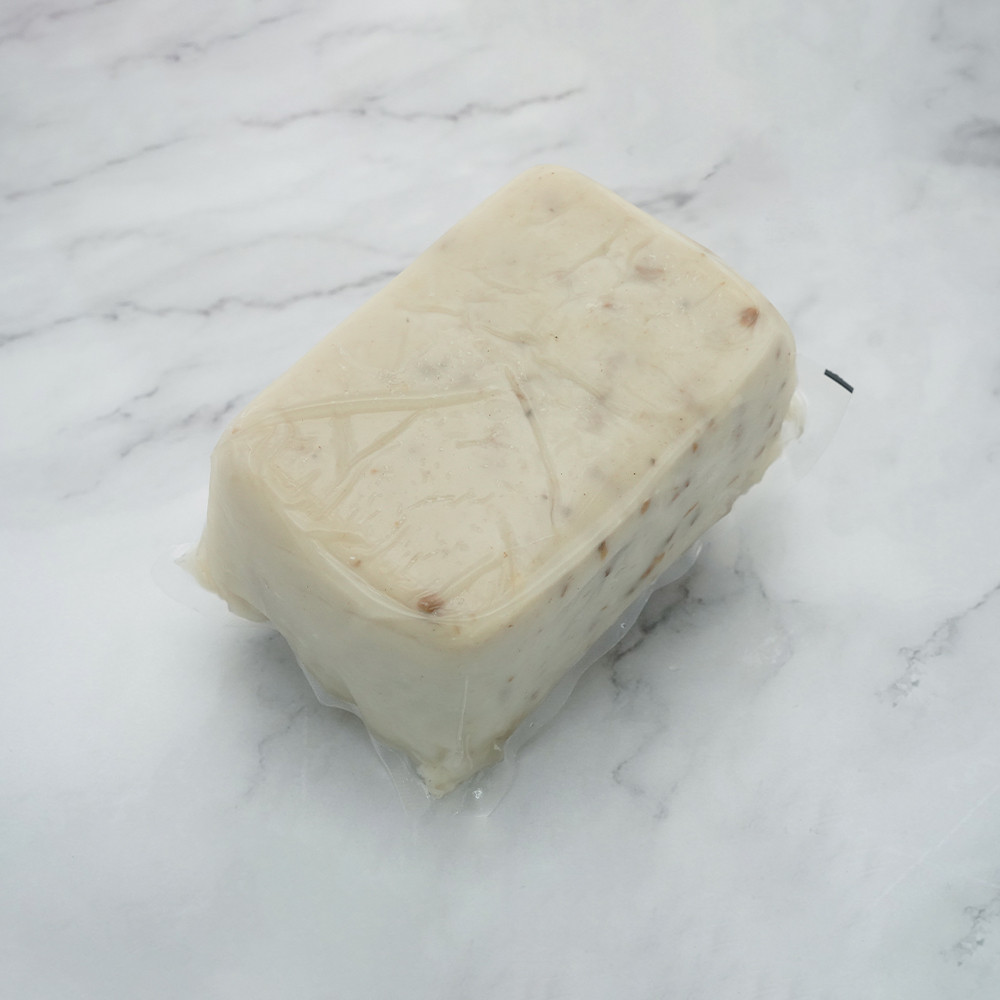
Nylon (PA) Thermoforming Film — Food Package 15309 (262μm)
NL262 NY/PE thermoforming film used as a sealing film on continuous automatic vacuum thermoforming lines, engineered for the deepest draw depths in the NL family. Laminates with PET or OPP film to form a vacuum bag for chicken, ham, sausage, bacon, duck, meat, and seafood.
The Deep-Draw Flagship of the NL Nylon/PE Series
15309 is the heaviest gauge in Intlpak's NL family at 262μm, running as the sealing (top) film on continuous automatic vacuum thermoforming lines. Its suggested 60–100mm forming depth is the deepest draw range in the series, for bulky cuts and multi-portion packs that shallower NL grades cannot form — and the extra thickness comes without giving up the family's twist and pinhole resistance, transparency, or gloss.
Where 15309 Is Used
- 1
Deepest-Draw Vacuum Packaging
Deep-draw vacuum packaging film for refrigerated and frozen food. At 262μm this is the heaviest gauge in the NL nylon (PA) family, with a 4000/4500 kg/cm² modulus to match.
- 2
Bulk and Multi-Portion Meat Packs
Bulky and multi-portion cuts of beef, chicken, pork, seafood, sausage, and fresh meat. This is catering and wholesale territory, where one pack carries what several retail packs would.
- 3
Deep-Cavity Processed Meats
Ham, bacon, duck, and other ready-to-eat and processed meats requiring deep cavities. Haze reads 20% — at this gauge the pack is specified for protection and volume rather than display.
- 4
60-100mm Forming Depth Lines
Sealing film on continuous automatic vacuum thermoforming lines at a 60–100mm forming depth. A coefficient of friction of 0.10 static and 0.09 kinetic keeps a heavy web moving predictably through the forming station.
Full Specifications — Thermoforming Nylon/PE Film Series
15309 is the 262μm grade in Intlpak's NL nylon/PE thermoforming film family — a 262 micron deep-draw nylon film, the heaviest gauge in the series, with 20% haze and a 2% tensile modulus of 4000/4500 kg/cm² (MD/TD). The table below shows 15309 alongside the lighter-gauge 50–180μm grades in the same series.
| Property | Standard | Unit | F2646 (50μm) | F2624 (80μm) | F2615 (120μm) | F2606 (150μm) | F2647 (180μm) | 15309 (262μm) |
|---|---|---|---|---|---|---|---|---|
| Thickness | — | μm | 50 | 80 | 120 | 150 | 180 | 262 |
| Yield Point (MD) | ASTM D882 | kg/cm² | 150 | 150 | 130 | 180 | 160 | N/A |
| Yield Point (TD) | ASTM D882 | kg/cm² | 150 | 150 | 140 | 170 | 130 | N/A |
| Break Point (MD) | ASTM D882 | kg/cm² | 450 | 460 | 320 | 430 | 400 | N/A |
| Break Point (TD) | ASTM D882 | kg/cm² | 380 | 470 | 330 | 450 | 430 | N/A |
| Elongation (MD) | ASTM D882 | % | 370 | 480 | 450 | 510 | 620 | N/A |
| Elongation (TD) | ASTM D882 | % | 440 | 550 | 500 | 560 | 600 | N/A |
| Tensile Modulus 2% (MD) | ASTM D882 | kg/cm² | 2400 | 2400 | 2400 | 3400 | 3400 | 4000 |
| Tensile Modulus 2% (TD) | ASTM D882 | kg/cm² | 2100 | 2300 | 2300 | 3000 | 3200 | 4500 |
| Static C.O.F. (treated) | ASTM D1894 | kg/200g | N/A | N/A | N/A | N/A | N/A | 0.10 |
| Static C.O.F. (untreated) | ASTM D1894 | kg/200g | 0.08 | 0.08 | 0.09 | 0.09 | 0.09 | 0.10 |
| Kinetic C.O.F. (treated) | ASTM D1894 | kg/200g | N/A | N/A | N/A | N/A | N/A | 0.08 |
| Kinetic C.O.F. (untreated) | ASTM D1894 | kg/200g | 0.07 | 0.08 | 0.08 | 0.09 | 0.08 | 0.09 |
| Haze | ASTM D1003 | % | 4 | 5.7 | 10 | 12.5 | 15 | 20 |
| Corona-Treated Surface | — | — | N/A | N/A | NY | NY | NY | NY |
| Suggested Forming Depth | — | mm | — (sealing film) | 10–15 | 10–30 | 40–50 | 60–70 | 60–100 |
| Width | — | — | Customized | |||||
| Length | — | — | Customized | |||||
Reviewed by: Intlpak R&D Team.
Why 15309 Performs
Storage Notice
Avoid exposure to direct light, wind, and rain — store under appropriate conditions. Prevent products from slipping from high places, being polluted, or being impacted during handling.
Quality & Certification
Manufactured under ISO 9001 quality management and GMP clean-room production, with ISO 22000 & HACCP food-safety certification. All products undergo annual safety checks.
Questions About 15309
15309 is 262 μm thick — what needs 60–100 mm of forming depth?
Bone-in primal cuts, large cheese wheels, three-dimensional prepared foods, bulk catering portions. At 100 mm it is the deepest grade here and plainly over-specified for sliced or flat product. If your depth stays within 70 mm, evaluate F2647 (180 μm) first — the material cost is far lower.
15309's modulus of 4000/4500 is lower than thinner grades — can it still deep draw?
Yes, and the low modulus is part of why. A softer web conforms and extends into the tooling rather than resisting it; 15309 achieves 100 mm through 262 μm of material margin, not through stiffness. That is the opposite of the barrier-film families, where higher modulus enables deeper draw — the two mechanisms don't transfer between series.
What does a 0.10 coefficient of friction mean during deep draw?
A slippery surface, so the web slides and redistributes material inside the tooling — which helps keep corner wall thickness even. Past 60 mm of draw, whether material can be pulled into the cavity is the governing question, and a static C.O.F. of 0.10 (ASTM D1894) is low friction; combined with the gauge, it is part of how 100 mm becomes achievable.
15309 has the family's highest haze at 20% — does that hurt deep trays?
For most applications, no. A 100 mm cavity has tall side walls, and what shoppers mainly see is the top web and the tray face, so put the visual requirement on a clear top web such as F2646 at 4%. Where overall clarity matters more than depth, F2606 (12.5%, 40–50 mm) is the compromise.
How does 15309 run on the machine?
As the bottom web: heated on a continuous automatic vacuum thermoformer, drawn into a deep cavity to form the tray, then sealed to a top web under vacuum. It is positioned as this family's deep-draw limit, for large or irregularly shaped foods across ambient, chilled and frozen distribution.
Is there a limit to how deep a vacuum pack can be formed?
In practice the film sets it. Intlpak's NL nylon/PE series tops out at 15309, a 262 μm grade — the heaviest gauge in the range, with a 4000/4500 kg/cm² modulus and 20% haze. Beyond a certain depth the film thins at the corners faster than added gauge can compensate, which is why bulk and catering packs are usually formed rather than pouched.
Does a heavier film always run better on the machine?
Not automatically — surface behaviour matters as much as gauge. 15309 reads a coefficient of friction of 0.10 static and 0.09 kinetic, low and consistent, which keeps a 262 μm web moving predictably through a forming station where a grippier film would drag. Check the friction figure alongside thickness when a heavy grade is going onto an existing line.