Product Photo
Nylon Thermoforming Film — Medical Care Package
F2606-M is the 150μm deepest-draw grade in Intlpak's NE nylon/PE medical thermoforming film series, built for large sterilized medical equipment requiring a 30–50mm forming cavity, and suitable for E.O. or gamma (r-ray) sterilization.
The Deepest-Draw Base Film in the Medical Nylon Series
F2606-M is the heaviest gauge in Intlpak's NE medical series at 150μm, supporting the deepest cavities in the family — 30 to 50mm — for large sterilized equipment beyond the reach of the 80–120μm grades. It is produced by computer-controlled co-extrusion with automatic foreign-object detection and thickness control under clean-room standards, and the heavier gauge carries forward the series' formability, pinhole resistance, and inspection clarity.
Where F2606-M Is Used
- 1 Vacuum thermoforming base film for disposable medical supplies and medical equipment
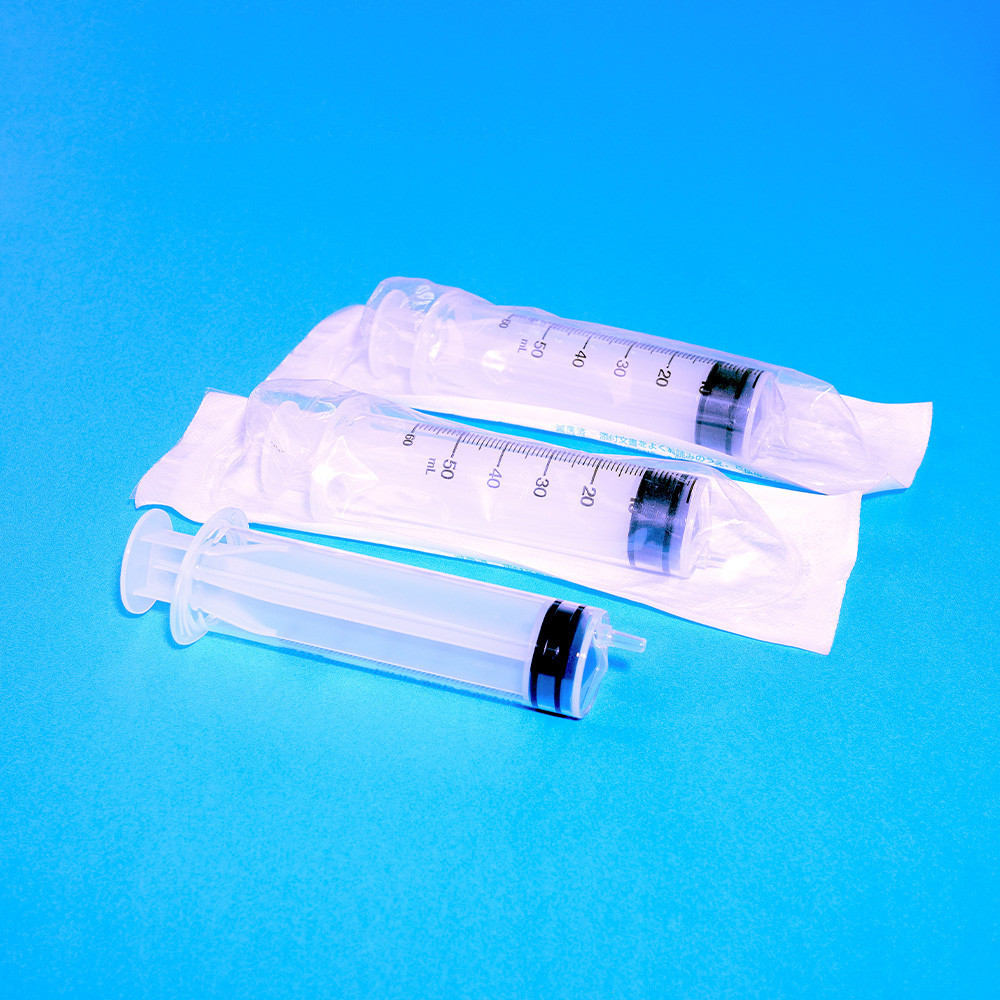
- 2 Injection syringes, gauze, cotton pads, and sputum suction tubes
- 3 Large sterilized medical equipment requiring a 30–50mm deep forming cavity
- 4 Packaging lines requiring E.O. or gamma (r-ray) sterilization compatibility
Full Specifications — Nylon/PE Medical Thermoforming Film Series
F2606-M is the 150μm deepest-draw grade in Intlpak's NE nylon/PE medical thermoforming film family. The table below shows F2606-M alongside the shallower 80–120μm grades in the same series.
| Property | F2624-M (80μm) | F2703 (110μm) | F2615-M (120μm) | F2606-M (150μm) |
|---|---|---|---|---|
| Thickness | 80 μm | 110 μm | 120 μm | 150 μm |
| Suggested Forming Depth | 10–15 mm | 10–30 mm | 10–30 mm | 30–50 mm |
| Formability / Pinhole Resistance | Best-in-class across the series | |||
| Optical Properties | High transparency, high gloss | |||
| Sterilization Compatibility | E.O. and gamma (r-ray) | E.O. and gamma (r-ray) | E.O. and gamma (r-ray) | E.O. and gamma (r-ray) |
| Typical Application | Injection syringes, gauze, cotton pads, suction tubes, and other medical equipment | |||
| Width | Customized | |||
| Length | Customized | |||
Reviewed by: Intlpak R&D Team.
Why F2606-M Performs
Storage Notice
Avoid exposure to direct light, wind, and rain — store under appropriate conditions. Prevent products from slipping from high places, being polluted, or being impacted during handling.
Quality & Certification
Manufactured under ISO 9001 quality management and GMP clean-room production standards suited to medical-grade packaging, with ISO 22000 & HACCP certification. All products undergo annual safety checks.
Questions About F2606-M
Is F2606-M the deepest grade in the medical family?
Yes. At 150 μm it covers 30–50 mm of forming depth, the family ceiling, for large sterilized equipment. Below it sit F2615-M (120 μm, 10–30 mm), F2703 (110 μm, 10–30 mm) and F2624-M (80 μm, 10–15 mm).
Drawing to 50 mm — where does sterile barrier risk concentrate?
In corner wall thickness and flange flatness. Deeper draw thins corner material further, raising micro-perforation risk, while a deep cavity makes it harder to hold the sealing flange flat, which can produce discontinuous seals. Both need measurement and testing on actual packs during process validation — film specification alone won't settle them.
F2606-M and the food-grade F2606 differ by one letter — how do I avoid mix-ups?
Purchase by full part number and verify at goods-in. F2606 is a food vacuum packaging film with no medical sterilization compatibility claim; only F2606-M is specified for E.O. and gamma. They share the same 150 μm gauge and look similar, so distinguish them clearly in your material master and labelling to prevent line errors.
Which devices suit F2606-M?
Larger sterilized equipment — orthopaedic instrument sets, major surgical kits, three-dimensional instrument trays. These have deep cavities and higher mass, requiring enough material margin to keep the tray rigid and intact through distribution, which is what the 150 μm gauge provides.
How should F2606-M's sterilization compatibility be verified?
It is specified for E.O. and gamma, but a compatibility statement is not validation of your process. Evaluate post-sterilization seal strength, peel behaviour and appearance at your actual dose or gas cycle, and pair that with accelerated ageing to confirm shelf life. Our engineering team can supply supporting technical data to help build the validation plan.