Product Photo
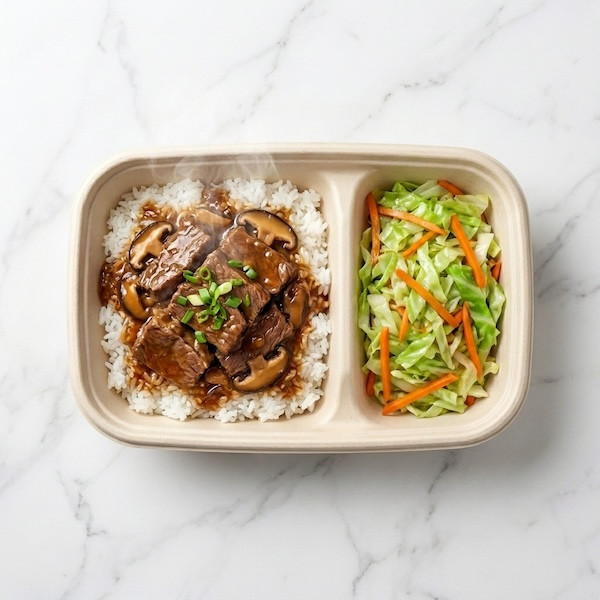
TPX-PP Lamination Film F4407 (50μm)
Dual-ovenable lamination film for pulp-molded food containers, withstanding temperatures up to 160°C. Cuts plastic usage by up to 85% versus traditional plastic trays while adding full microwave-and-oven capability and an FDA-approved anti-migration food-contact layer.
The Mid-Gauge Dual-Ovenable Film for Sustainable Pulp Containers
F4407 is the mid-gauge grade in Intlpak's TPX-PP lamination family, between F4408 (35μm) and F4403 (70μm), bonding a food-contact PP/TPX layer to a plant-fiber base. Where a standard pulp container is typically microwave-only, this lamination upgrades it to fully dual-ovenable up to 160°C, and the FDA-approved food-contact-grade TPX blend improves thermal stability while helping prevent additives from migrating into high-heat, high-fat foods.
Where F4407 Is Used
- 1
Ready-to-Eat Convenience Meals
Ready-to-eat and fresh convenience meals. F4407 is the 50μm TPX-PP lamination film for pulp-molded food containers, cutting plastic usage by up to 85% against a traditional all-plastic tray.
- 2
Frozen-to-Oven Entrees
Frozen-to-oven entrees. Heat resistance up to 160°C makes the container dual-ovenable — microwave and conventional oven — so a frozen meal goes from freezer to oven in the pack it was sold in.
- 3
Premium Takeout and Catering
Premium takeout and catering services. The FDA-approved anti-migration food-contact layer means the visible sustainability story does not come at the cost of additive or microplastic migration into the food.
- 4
High-Fat Dishes and Bakery
High-fat dishes, curries, bento meals, and bakery products. TPX technology blocks migration at the food-contact face, which is the layer under most stress when hot oil sits against it through a reheat cycle.
Specifications & Performance Comparison
F4407 is the 50μm grade in Intlpak's TPX-PP lamination film family — a 50 micron dual-ovenable lamination film for pulp-molded food containers, heat-resistant up to 160°C and cutting plastic use by up to 85% versus a conventional plastic tray. The table below shows F4407 alongside its 35μm and 70μm siblings for reference.
| Property | F4408 (35μm, reference) | F4407 (50μm) | F4403 (70μm, reference) |
|---|---|---|---|
| Thickness | 35 μm | 50 μm | 70 μm |
| Max. Heat Resistance | — | Up to 160°C | Dual-ovenable |
| Plastic Reduction | — | Up to 85% | Up to 85% |
| Width | Customized | ||
| Length | Customized | ||
| Feature | Traditional Plastic Trays | TPX-PP Laminated Pulp Containers |
|---|---|---|
| Plastic Usage | 100% plastic | Reduced by up to 85% |
| Heating Adaptability | Microwave only (mostly) | Dual-ovenable (microwave & oven safe), up to 160°C |
| Food Safety | Higher risk of additive migration | TPX technology blocks microplastic and chemical migration |
| Eco-Friendliness | High carbon footprint | Renewable plant-fiber base, highly sustainable |
F4407 is part of Intlpak's TPX-PP lamination film family alongside F4403 and F4408 grades — see the full lamination film catalog for related thicknesses.
Reviewed by: Intlpak R&D Team.
Why F4407 Performs
Storage Notice
Avoid exposure to direct light, wind, and rain — store under appropriate conditions. Prevent products from slipping from high places, being polluted, or being impacted during handling.
Quality & Certification
Manufactured under ISO 9001 quality management and GMP clean-room production, with ISO 22000 & HACCP food-safety certification. Fully compliant with US FDA regulations and validated by SGS food-contact safety testing. All products undergo annual safety checks.
Questions About F4407
Across the 35/50/70 μm TPX-PP grades, where does F4407 sit?
It is the mainstream grade. At 50 μm it falls between F4408 (35 μm) and F4403 (70 μm), and it carries both a stated heat rating — up to 160°C — and plastic reduction of up to 85%. Most molded fiber meal tray projects start their evaluation here, then move up or down with container weight and heating intensity.
Is the 160°C dual-ovenable rating for the film or the whole container?
For the finished laminate on a molded fiber container. F4407 is specified as microwave- and oven-safe to 160°C, but real performance depends on lamination quality, the fiber substrate and heating time. Test with your actual container and heating profile — temperature, duration, fat content — rather than inferring from the film specification alone.
How is the 85% plastic reduction calculated?
As a comparison against a conventional all-plastic tray. The container body becomes molded plant fiber, leaving only a thin food-contact film as plastic, so total plastic drops sharply — the finished TPX-MFC container in this family measures 10.75% plastic content against 100% for a conventional PP container. The exact ratio varies with container size and film gauge.
What food-safety role does the TPX layer play?
Migration blocking. The food-contact surface is an FDA-approved food-grade TPX co-extrusion intended to suppress additive and microplastic migration into food under high heat and high fat. That is the principal difference between this family and ordinary PP-coated paper containers, particularly in oven-heated applications.
F4407 and F4403 are both oven-safe — which should I take?
Container specification and cost decide. F4403 at 70 μm gives a heavier film layer for larger, heavier or high-fat meals; F4407 at 50 μm is sufficient for most standard tray sizes and uses less material. For maximum light-weighting, evaluate F4408 (35 μm) — noting its heat and plastic-reduction figures are not yet published.
Can a paper-based food container go in the oven?
With the right lamination, yes. F4407 is rated for heat resistance up to 160°C, which covers both microwave and conventional oven use — the container goes from chiller to oven to table without transferring the food. Ordinary PE-coated paper containers soften well below that. Confirm the temperature and time your own menu requires before specifying.
Which lamination film gauge should we specify for our container?
Match it to what the container carries and how it is handled. Intlpak publishes three: 35 μm (F4408), 50 μm (F4407) and 70 μm (F4403). F4407 at 50 μm is the middle option, rated to 160°C with plastic use cut by up to 85% against a conventional plastic tray. Heavier gauge adds robustness but also adds plastic — which works against the reduction you are buying.