Product Photo
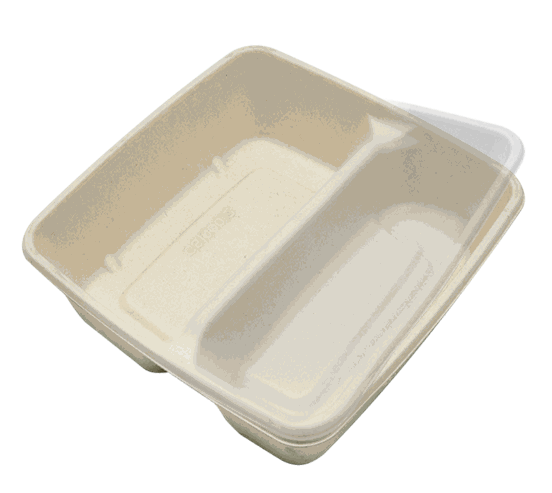
TPX-PP Lamination Film F4403 (70μm)
Dual-ovenable lamination film for pulp-molded food containers. Cuts plastic usage by up to 85% versus traditional plastic trays while adding full microwave-and-oven capability and an FDA-approved anti-migration food-contact layer.
Dual-Ovenable Lamination Film for Sustainable Pulp Containers
F4403 is the heaviest gauge in Intlpak's TPX-PP lamination family, bonding a food-contact PP/TPX layer to a plant-fiber base. Where a standard pulp container is typically microwave-only, this lamination upgrades it to fully dual-ovenable, and the FDA-approved food-contact-grade TPX blend improves thermal stability while helping prevent plastic additives from migrating into food.
Where F4403 Is Used
- 1
Ready-to-Eat Convenience Meals
Ready-to-eat and fresh convenience meals. F4403 is the 70μm grade, the heaviest TPX-PP lamination film in the range, for containers that need a more robust laminate over the fiber base.
- 2
Frozen-to-Oven Entrees
Frozen-to-oven entrees. The container is dual-ovenable, microwave and conventional oven alike, and cuts plastic usage by up to 85% versus a traditional plastic tray.
- 3
Premium Takeout and Catering
Premium takeout and catering services. A renewable plant-fiber base with a thin functional laminate gives operators a lower-carbon container without giving up leak resistance on saucy dishes.
- 4
Retort Inner Packaging and Reheat
Retort pouch inner packaging and post-sterilization food reheat. F4403 is the only gauge in the range listed for this use, taking the container from sterilization through to the consumer's oven in one material.
Specifications & Performance Comparison
F4403 is the 70μm grade in Intlpak's TPX-PP lamination film family — a 70 micron dual-ovenable lamination film for pulp-molded food containers, the heaviest gauge in the family, cutting plastic use by up to 85% versus a conventional plastic tray. The table below shows F4403 alongside its 35μm and 50μm siblings for reference.
| Property | F4408 (35μm, reference) | F4407 (50μm, reference) | F4403 (70μm) |
|---|---|---|---|
| Thickness | 35 μm | 50 μm | 70 μm |
| Max. Heat Resistance | — | Up to 160°C | Dual-ovenable |
| Plastic Reduction | — | Up to 85% | Up to 85% |
| Width | Customized | ||
| Length | Customized | ||
| Feature | Traditional Plastic Trays | TPX-PP Laminated Pulp Containers |
|---|---|---|
| Plastic Usage | 100% plastic | Reduced by up to 85% |
| Heating Adaptability | Microwave only (mostly) | Dual-ovenable (microwave & oven safe) |
| Food Safety | Higher risk of additive migration | TPX technology blocks migration |
| Eco-Friendliness | High carbon footprint | Renewable plant-fiber base, highly sustainable |
F4403 is part of Intlpak's TPX-PP lamination film family alongside F4407 and F4408 grades — see the full lamination film catalog for related thicknesses.
Reviewed by: Intlpak R&D Team.
Why F4403 Performs
Storage Notice
Avoid exposure to direct light, wind, and rain — store under appropriate conditions. Prevent products from slipping from high places, being polluted, or being impacted during handling.
Quality & Certification
Manufactured under ISO 9001 quality management and GMP clean-room production, with ISO 22000 & HACCP food-safety certification. All products undergo annual safety checks.
Questions About F4403
F4403 runs 70 μm — what does that buy over the 50 μm grade?
Film margin. A heavier food-contact layer holds barrier and durability more reliably in larger containers, heavier meals and high-fat dishes, whereas F4407 at 50 μm is sufficient for standard tray sizes. If your product is fat-heavy and sees extended oven heating, F4403's margin is worth paying for.
What does F4403 laminate to — can it go on a normal plastic tray?
It laminates to molded fiber containers, not plastic trays. The whole premise is replacing the plastic tray body with plant fiber and keeping only a thin food-contact film, which is how plastic use falls by up to 85%. If the container body stays plastic, the family's core benefit disappears.
Microwave and oven both work — what are the practical limits?
Heating conditions and the finished container structure. F4403 is specified as dual-ovenable, but temperature ceiling, heating duration and food fat content all shape performance; same-family F4407 is rated to 160°C as an indication of the range. Test with your actual meal and heating programme, and confirm with our engineers that your conditions fall within recommendations.
What does the FDA-approved TPX food-contact layer protect against?
Additive and microplastic migration. High heat combined with high fat is the condition most likely to drive migration, and reheating a meal tray is exactly that condition. F4403's food-contact surface is a food-grade TPX co-extrusion aimed at this, while the PP layer handles heat, moisture and grease resistance — the two divide the work.
To adopt reduced-plastic trays, should I buy film or finished containers?
It depends whether you are a converter or a brand/foodservice operator. Converters with molded fiber lines buy lamination film such as F4403. Brands and operators who don't form containers themselves are better served evaluating the finished TPX-MFC container — a PET lid over a fiber tray at 10.75% plastic content, heat resistant to 160°C.
Our containers soften and leak with hot saucy food — what should we change?
The lining, and its heat rating. A container that deforms with hot food is usually limited by its coating rather than the fibre. F4403 is the 70 μm TPX-PP grade, the heaviest in Intlpak's dual-ovenable lamination family, cutting plastic use by up to 85% versus a conventional plastic tray while keeping the container serviceable hot.
Fibre container or plastic tray — what do we give up?
Mainly transparency and moulding freedom. A plastic tray can be clear and formed into complex shapes; a laminated fibre container is opaque and works in simpler geometries. What you gain is material: Intlpak's TPX-PP laminated containers cut plastic use by up to 85% against a conventional plastic tray, and the 70 μm F4403 keeps oven capability. Recycling and disposal rules vary by market — check locally.