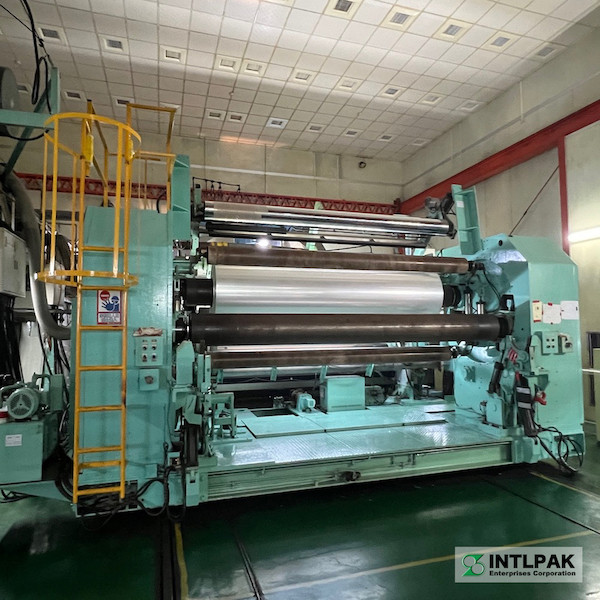
Product Photo
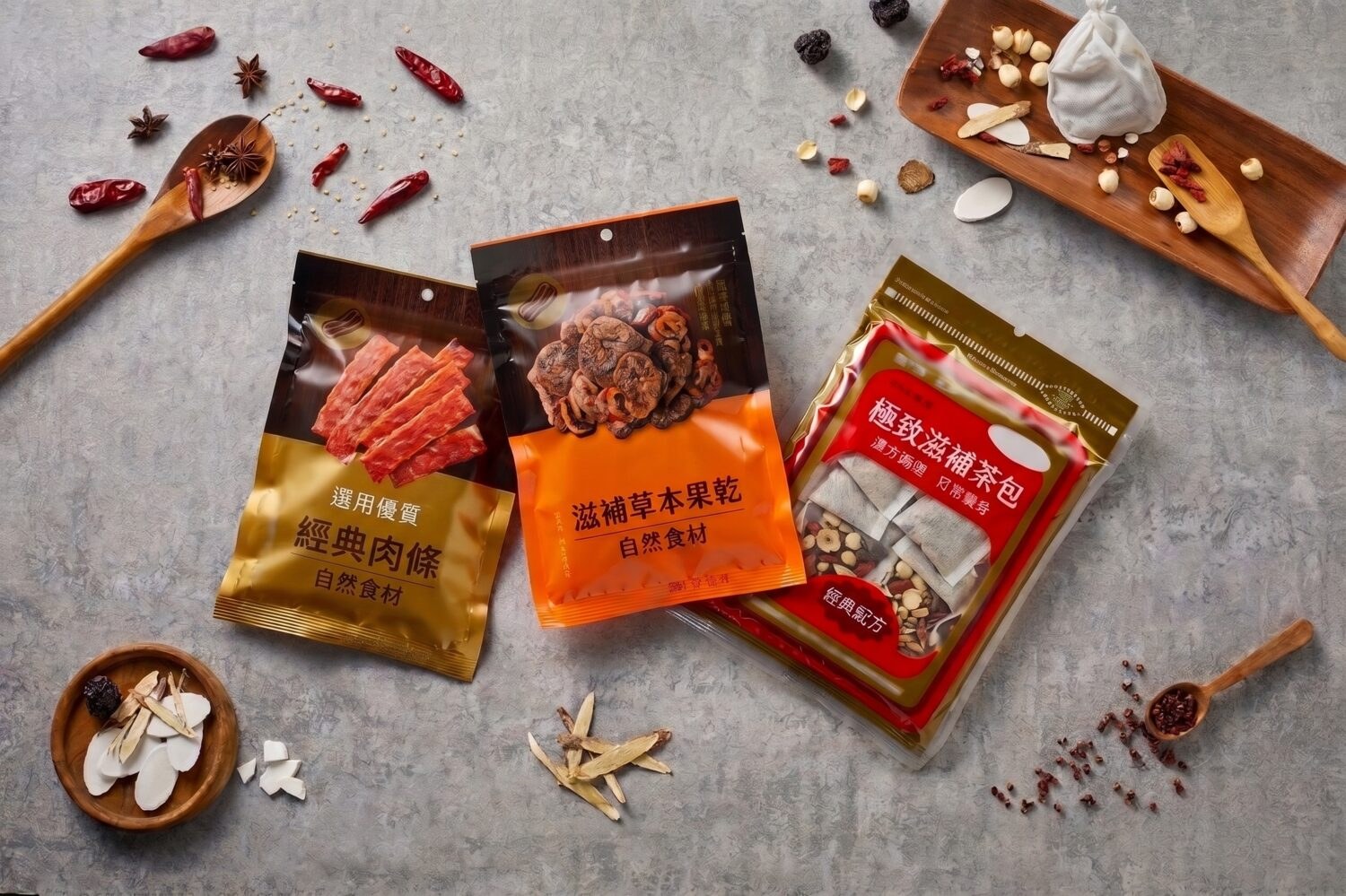
High Barrier PE/EVOH/PE Film
EVE 55 coextrusion film with high oxygen barrier, fragrance retention, and transparency. Corona-treated on one side for lamination with PET, OPP, or NY into food, medical, and cosmetics packaging structures.
Balanced Mid-Weight Barrier Coextrusion Film
F1257 (EVE #55) uses an EVOH core for oxygen barrier and fragrance retention, in a structure that uses less material overall than a foil laminate. At 55μm it offers a heavier web than the 40–45μm grades for applications needing extra puncture resistance, while still keeping haze under 6%.
Where F1257 Is Used
- 1 Food, medical care, cosmetics, and sanitary/hygienic cleaning product packaging
- 2 Applications requiring high oxygen-barrier properties
- 3 Can be printed or laminated with other film materials
- 4 Modified Atmosphere Packaging (MAP) of beef, chicken, pork, seafood, livestock, and agricultural products
Full Specifications — High Barrier PE Film Series
F1257 is the 55μm grade in Intlpak's EVE high barrier PE/EVOH/PE film family. The table below shows F1257 alongside its 40μm, 45μm, and 60μm siblings for reference.
| Property | Standard | Unit | F1249 (40μm) | F1201 (45μm) | F1257 (55μm) | F1256 (60μm) |
|---|---|---|---|---|---|---|
| Thickness | — | μm | 40 | 45 | 55 | 60 |
| Yield Point (MD) | ASTM D882 | kg/cm² | 140 | 180 | 140 | 240 |
| Yield Point (TD) | ASTM D882 | kg/cm² | 120 | 180 | 130 | 250 |
| Break Point (MD) | ASTM D882 | kg/cm² | 300 | 380 | 320 | 340 |
| Break Point (TD) | ASTM D882 | kg/cm² | 190 | 290 | 230 | 300 |
| Elongation (MD) | ASTM D882 | % | 370 | 330 | 380 | 390 |
| Elongation (TD) | ASTM D882 | % | 380 | 390 | 410 | 420 |
| Tensile Modulus 2% (MD) | ASTM D882 | kg/cm² | 3000 | 5200 | 3100 | 6800 |
| Tensile Modulus 2% (TD) | ASTM D882 | kg/cm² | 2900 | 5200 | 3000 | 7400 |
| Static C.O.F. (treated) | ASTM D1894 | kg/200g | 0.06 | 0.09 | 0.07 | 0.37 |
| Static C.O.F. (untreated) | ASTM D1894 | kg/200g | 0.08 | 0.09 | 0.08 | 0.38 |
| Kinetic C.O.F. (treated) | ASTM D1894 | kg/200g | 0.05 | 0.07 | 0.05 | 0.36 |
| Kinetic C.O.F. (untreated) | ASTM D1894 | kg/200g | 0.05 | 0.06 | 0.07 | 0.36 |
| Haze | ASTM D1003 | % | 4.8 | 4.2 | 5.6 | 10.4 |
| Oxygen Transmission Rate | ISO 14663-2 | cc/m²·24h, atm, 20°C, 65% RH | 2.6 | 0.9 | 1.3 | 0.65 |
| Water Vapor Transmission Rate | ASTM E96-E | g/m²·24h, 40°C, 90% RH | 15.4 | 14 | 10 | 10.5 |
| Width | — | — | Customized | |||
| Length | — | — | Customized | |||
Reviewed by: Intlpak R&D Team.
Why F1257 Performs
Storage Notice
Avoid exposure to direct light, wind, and rain — store under appropriate conditions. Prevent products from slipping from high places, being polluted, or being impacted during handling.
Quality & Certification
Manufactured under ISO 9001 quality management and GMP clean-room production, with ISO 22000 & HACCP food-safety certification. All products undergo annual safety checks.
Questions About F1257
F1257 is 55 μm — why is its barrier behind the thinner F1201?
The two lay up their EVOH differently. F1257 reads 1.3 cc/m²·24h against F1201 's 0.9 at 45 μm — F1257 spends its extra gauge on PE, buying moisture barrier (WVTR 10 versus 14) and overall thickness margin rather than a lower oxygen rate. Specify from whichever is actually your limiting factor.
When is F1257 the better call over F1201?
When moisture, not oxygen, is the threat. F1257's WVTR of 10 g/m²·24h clearly beats F1201 's 14 and sits alongside F1256 's 10.5. For dry foods, powders, and moisture-sensitive medical or cleaning products, that matters more than chasing a lower OTR.
Is F1257 mechanically strong enough for automatic packaging lines?
It is mid-to-low in this family, so check your tension settings. Yield point runs 140/130 kg/cm² and break point 320/230 kg/cm², close to F1249 and well under F1256 's 240/250 and 340/300. For high-draw or high-speed machines, F1256 is the safer specification.
Can F1257 be printed and laminated into composite structures?
Both. Like the rest of the family it accepts direct printing and laminates to PET, OPP or NY, with the EVOH core carrying oxygen barrier and aroma retention while outer layers supply print surface, heat resistance or mechanical strength as needed.
Where does F1257's 5.6% haze place it for clarity?
Mid-range: clearer than F1256 at 10.4%, slightly behind F1201 at 4.2% and F1249 at 4.8%. In practice 5.6% still reads as clear — contours and colour are plainly visible — and the difference is mainly apparent when grades are compared side by side.