Product Photo
High Barrier PE/EVOH/PE Film F1256 (60μm)
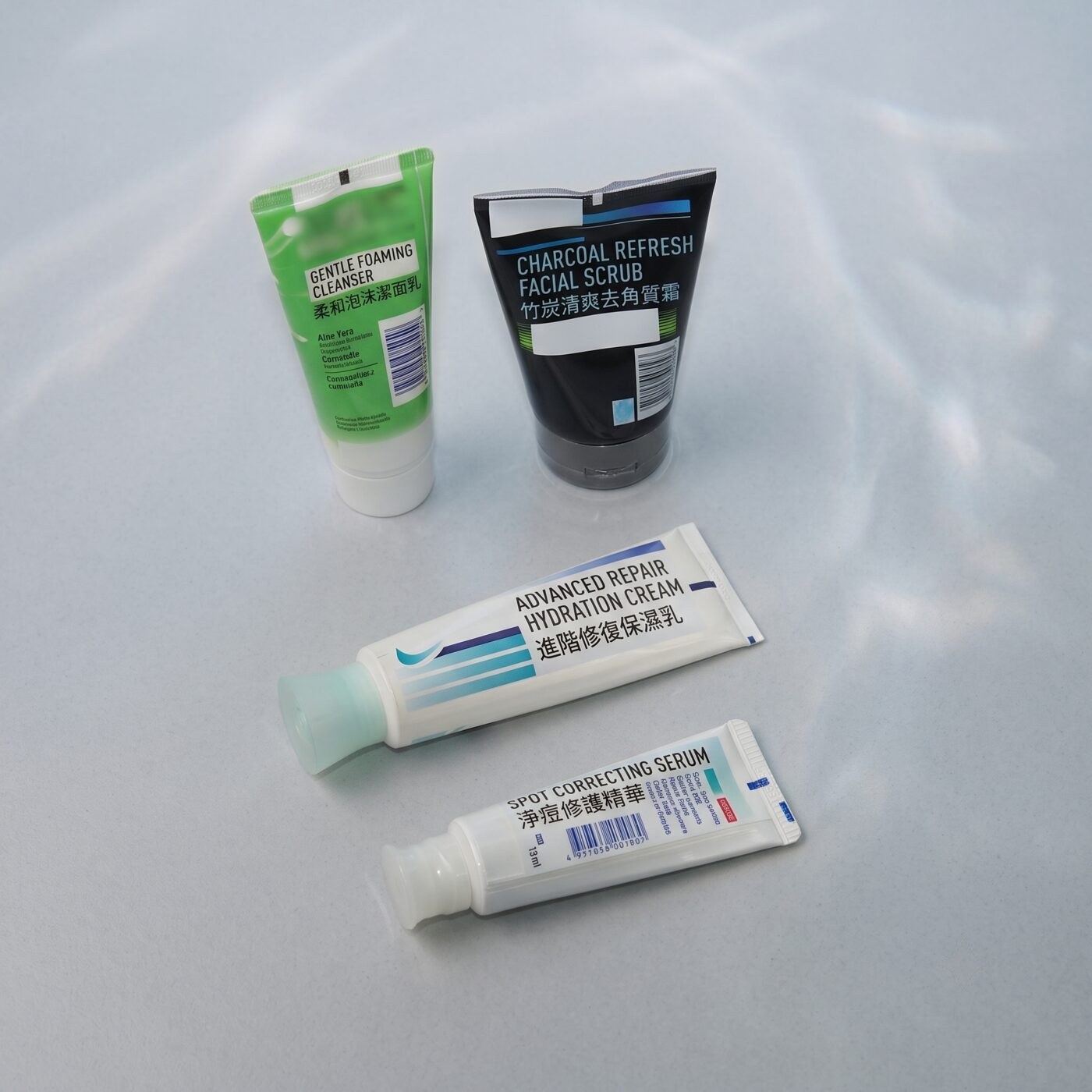
EVE 60 coextrusion film — the heaviest, highest-barrier grade in the EVE family — with fragrance retention. Corona-treated on one side for lamination with PET, OPP, or NY into food, medical, and cosmetics packaging structures.
Maximum-Barrier Coextrusion Film for Demanding Packs
F1256 (EVE #60) is the top thickness and top barrier grade in Intlpak's EVE family, giving the lowest oxygen transmission and highest mechanical strength of the series alongside fragrance retention. The heavier gauge trades a higher haze reading for the family's toughest yield and break strength, making it the grade to specify for demanding MAP and industrial packaging.
Where F1256 Is Used
- 1
Food, Medical and Cosmetics Barrier Packs
Food, medical care, cosmetics, and sanitary/hygienic cleaning product packaging. At 60μm F1256 is the heaviest EVE grade, with an oxygen transmission rate of 0.65 cc/m²·24h — the tightest oxygen barrier in the family.
- 2
Longest Shelf Life Without Foil
Applications requiring the highest oxygen-barrier properties in the EVE range. At 0.65 cc/m²·24h F1256 is the ceiling for a transparent PE/EVOH/PE structure — where more barrier is needed the pack usually has to give up transparency and move to foil.
- 3
Printing and Lamination for High-Speed Lines
Can be printed or laminated with other film materials. F1256 also carries the family's strongest mechanicals — yield point 240/250 kg/cm² and break point 340/300 kg/cm² — which is the margin a fast line or a high-tension unwind needs.
- 4
Long-Shelf-Life MAP Meat Packaging
Modified Atmosphere Packaging of beef, chicken, pork, seafood, livestock, and agricultural products. Where the target is the longest chilled shelf life the material can support, F1256 is the default; haze reads 10.4%, so display clarity is the trade.
Full Specifications — High Barrier PE Film Series
F1256 is the 60μm grade — the heaviest and highest-barrier — in Intlpak's EVE high barrier PE/EVOH/PE film family, a 60 micron oxygen barrier film measuring an oxygen transmission rate (OTR) of 0.65 cc/m²·24h, the lowest OTR in the family, with 10.4% haze. The table below shows F1256 alongside its 40μm, 45μm, and 55μm siblings for reference.
| Property | Standard | Unit | F1249 (40μm) | F1201 (45μm) | F1257 (55μm) | F1256 (60μm) |
|---|---|---|---|---|---|---|
| Thickness | — | μm | 40 | 45 | 55 | 60 |
| Yield Point (MD) | ASTM D882 | kg/cm² | 140 | 180 | 140 | 240 |
| Yield Point (TD) | ASTM D882 | kg/cm² | 120 | 180 | 130 | 250 |
| Break Point (MD) | ASTM D882 | kg/cm² | 300 | 380 | 320 | 340 |
| Break Point (TD) | ASTM D882 | kg/cm² | 190 | 290 | 230 | 300 |
| Elongation (MD) | ASTM D882 | % | 370 | 330 | 380 | 390 |
| Elongation (TD) | ASTM D882 | % | 380 | 390 | 410 | 420 |
| Tensile Modulus 2% (MD) | ASTM D882 | kg/cm² | 3000 | 5200 | 3100 | 6800 |
| Tensile Modulus 2% (TD) | ASTM D882 | kg/cm² | 2900 | 5200 | 3000 | 7400 |
| Static C.O.F. (treated) | ASTM D1894 | kg/200g | 0.06 | 0.09 | 0.07 | 0.37 |
| Static C.O.F. (untreated) | ASTM D1894 | kg/200g | 0.08 | 0.09 | 0.08 | 0.38 |
| Kinetic C.O.F. (treated) | ASTM D1894 | kg/200g | 0.05 | 0.07 | 0.05 | 0.36 |
| Kinetic C.O.F. (untreated) | ASTM D1894 | kg/200g | 0.05 | 0.06 | 0.07 | 0.36 |
| Haze | ASTM D1003 | % | 4.8 | 4.2 | 5.6 | 10.4 |
| Oxygen Transmission Rate | ISO 14663-2 | cc/m²·24h, atm, 20°C, 65% RH | 2.6 | 0.9 | 1.3 | 0.65 |
| Water Vapor Transmission Rate | ASTM E96-E | g/m²·24h, 40°C, 90% RH | 15.4 | 14 | 10 | 10.5 |
| Width | — | — | Customized | |||
| Length | — | — | Customized | |||
Reviewed by: Intlpak R&D Team.
Why F1256 Performs
Storage Notice
Avoid exposure to direct light, wind, and rain — store under appropriate conditions. Prevent products from slipping from high places, being polluted, or being impacted during handling.
Quality & Certification
Manufactured under ISO 9001 quality management and GMP clean-room production, with ISO 22000 & HACCP food-safety certification. All products undergo annual safety checks.
Questions About F1256
Is F1256 the strongest barrier in the PE/EVOH/PE family?
Yes. Its OTR of 0.65 cc/m²·24h leads the four, ahead of F1201 at 0.9, F1257 at 1.3 and F1249 at 2.6, and its 10.5 g/m²·24h moisture barrier is also near the front. Where you need this family's tightest oxygen barrier, F1256 is the default.
Why is F1256 mechanically so much stronger than its siblings?
60 μm of gauge plus formulation differences give it the most substantial structure of the four: yield point 240/250 kg/cm² and break point 340/300 kg/cm², far above F1249 's 140/120 and 300/190. On high-speed lines, high-draw transport, or where puncture margin matters, that gap is real.
Does F1256 need different settings when it goes on the line?
Usually a higher seal temperature or longer dwell. As the thickest grade in the family it takes longer for heat to reach the seal interface than F1249 at 40 μm, so carrying settings across from a thinner grade tends to leave seals under-formed. Set from measured seal strength rather than visual inspection.
What packs is F1256 used for?
Flexible packaging with a firm high-barrier requirement — MAP gas-flushed fresh protein, medical care items, cosmetics and hygienic cleaning products. It prints and laminates like the rest of the family, with the EVOH core carrying oxygen barrier and aroma retention for the most shelf-life-critical tier of applications.
Why does F1256 carry the family's highest haze at 10.4%?
Gauge exacts it. At 60 μm haze rises to 10.4%, more than double F1201 's 4.2%. Where the pack must show its contents clearly, weigh barrier against optics: F1201 delivers 0.9 OTR at 4.2% haze, and for most retail flexible packaging that combination is the better fit.
How long a shelf life can we get without going to foil?
Within Intlpak's transparent PE/EVOH/PE range the ceiling is F1256: 60 μm, an OTR of 0.65 cc/m²·24h and a WVTR of 10.5 g/m²·24h, the tightest oxygen barrier of the four. Actual shelf life also depends on the filling, the pack format, and storage temperature, so treat the OTR as the ceiling the material sets rather than as a shelf-life guarantee.
Can one film survive a high-speed line and still hold a long shelf life?
That is what the heaviest grade is for. F1256 combines the family's tightest barrier (OTR 0.65 cc/m²·24h) with its strongest mechanicals — yield point 240/250 kg/cm² and break point 340/300 kg/cm², against F1249's 140/120 and 300/190. On fast lines, high web tension, or where puncture margin matters, that structural headroom is real.