Product Photo
High Barrier PE/EVOH/PE Film F1249 (40μm)
EVE 40 coextrusion film with high oxygen barrier, fragrance retention, and transparency. Corona-treated on one side for lamination with PET, OPP, or NY into food, medical, and cosmetics packaging structures.
High-Clarity, High-Barrier Coextrusion Film
F1249 (EVE #40) is the lightest gauge in Intlpak's EVE family, using an EVOH core for oxygen barrier and fragrance retention in a structure that uses less material overall than a foil laminate — the entry point where barrier performance is required but the pack does not need a heavier, stiffer web.
Where F1249 Is Used
- 1
Food, Cosmetics & Hygiene Product Packs
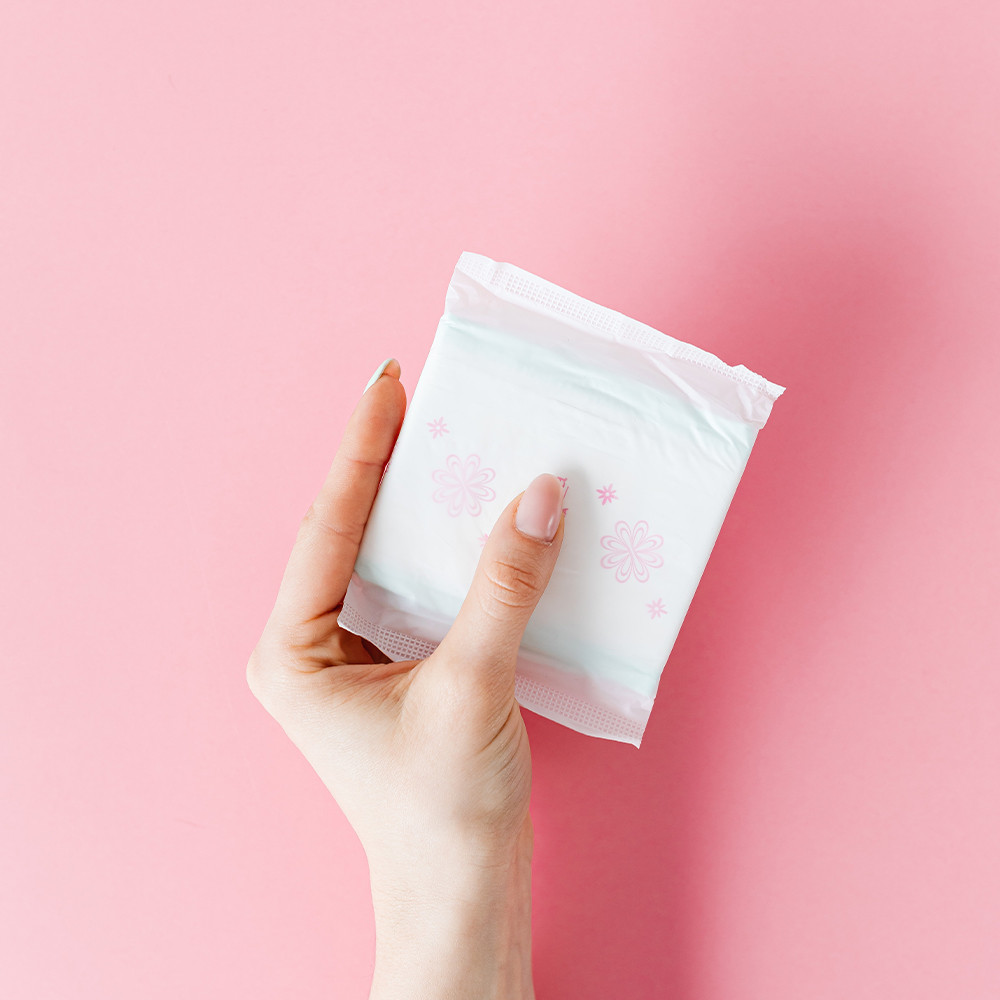
Food, medical care, cosmetics, and sanitary pad packaging. At 40μm with an oxygen transmission rate of 2.6 cc/m²·24h, F1249 is the entry gauge in the EVE family — the choice where the product turns over quickly and the tightest barrier would be paid for and not used.
- 2
Oxygen Barrier for Shelf-Life Extension
Applications requiring high oxygen-barrier properties. The EVOH core pulls oxygen transmission down to 2.6 cc/m²·24h — an order of magnitude below monolayer PE — which is what slows oxidation in fats, pigments, and aroma compounds.
- 3
Lamination with PET or OPP
Can be printed or laminated with other film materials. One side is corona treated for bonding with PET, OPP, or NY (PA), so F1249 works as the barrier layer inside a finished flexible structure rather than as a standalone film.
- 4
MAP Packs for Meat and Seafood
Modified Atmosphere Packaging of beef, chicken, pork, seafood, livestock, and agricultural products. In MAP the film has to hold the gas mixture that keeps meat looking fresh; 4.8% haze keeps the pack clear enough for retail display.
Full Specifications — High Barrier PE Film Series
F1249 is the 40μm grade in Intlpak's EVE high barrier PE/EVOH/PE film family — a 40 micron EVOH film with a measured oxygen transmission rate (OTR) of 2.6 cc/m²·24h and 4.8% haze, corona-treated on one side for lamination with PET, OPP, or NY. The table below shows F1249 alongside its 45μm, 55μm, and 60μm siblings for reference.
| Property | Standard | Unit | F1249 (40μm) | F1201 (45μm) | F1257 (55μm) | F1256 (60μm) |
|---|---|---|---|---|---|---|
| Thickness | — | μm | 40 | 45 | 55 | 60 |
| Yield Point (MD) | ASTM D882 | kg/cm² | 140 | 180 | 140 | 240 |
| Yield Point (TD) | ASTM D882 | kg/cm² | 120 | 180 | 130 | 250 |
| Break Point (MD) | ASTM D882 | kg/cm² | 300 | 380 | 320 | 340 |
| Break Point (TD) | ASTM D882 | kg/cm² | 190 | 290 | 230 | 300 |
| Elongation (MD) | ASTM D882 | % | 370 | 330 | 380 | 390 |
| Elongation (TD) | ASTM D882 | % | 380 | 390 | 410 | 420 |
| Tensile Modulus 2% (MD) | ASTM D882 | kg/cm² | 3000 | 5200 | 3100 | 6800 |
| Tensile Modulus 2% (TD) | ASTM D882 | kg/cm² | 2900 | 5200 | 3000 | 7400 |
| Static C.O.F. (treated) | ASTM D1894 | kg/200g | 0.06 | 0.09 | 0.07 | 0.37 |
| Static C.O.F. (untreated) | ASTM D1894 | kg/200g | 0.08 | 0.09 | 0.08 | 0.38 |
| Kinetic C.O.F. (treated) | ASTM D1894 | kg/200g | 0.05 | 0.07 | 0.05 | 0.36 |
| Kinetic C.O.F. (untreated) | ASTM D1894 | kg/200g | 0.05 | 0.06 | 0.07 | 0.36 |
| Haze | ASTM D1003 | % | 4.8 | 4.2 | 5.6 | 10.4 |
| Oxygen Transmission Rate | ISO 14663-2 | cc/m²·24h, atm, 20°C, 65% RH | 2.6 | 0.9 | 1.3 | 0.65 |
| Water Vapor Transmission Rate | ASTM E96-E | g/m²·24h, 40°C, 90% RH | 15.4 | 14 | 10 | 10.5 |
| Width | — | — | Customized | |||
| Length | — | — | Customized | |||
Reviewed by: Intlpak R&D Team.
Why F1249 Performs
Storage Notice
Avoid exposure to direct light, wind, and rain — store under appropriate conditions. Prevent products from slipping from high places, being polluted, or being impacted during handling.
Quality & Certification
Manufactured under ISO 9001 quality management and GMP clean-room production, with ISO 22000 & HACCP food-safety certification. All products undergo annual safety checks.
Questions About F1249
F1249 is the thinnest PE/EVOH/PE grade at 40 μm — where does it belong?
Entry-level barrier. 40 μm with an OTR of 2.6 cc/m²·24h makes it the loosest-barrier, lowest-cost grade in the family, suited to fast-turning products that do not need extended oxygen protection. For longer shelf life or oxidation-prone contents, F1201 (0.9), F1257 (1.3) or F1256 (0.65) are the right tier.
Does OTR 2.6 still count as high barrier?
Against packaging materials generally, yes; within this family it is the floor. Monolayer PE transmits oxygen in the hundreds, so the EVOH core pulling F1249 to 2.6 is an order-of-magnitude difference — but F1256 reaches 0.65 in the same family, four times tighter. Whether 2.6 suffices depends on your shelf-life target and how oxidation-sensitive the contents are, not on the category name.
F1249's mechanical figures are the lowest in the family — will it run?
It runs, but watch web tension. Yield point is 140/120 kg/cm² and break point 300/190 kg/cm², the lowest of the four ( F1256 posts 240/250 and 340/300). On high-tension lines or machines with strong draw, reduce tension settings or move to a heavier gauge to avoid machine-direction stretch pulling seals out of register.
Can F1249 be printed or laminated further?
Yes — the family is designed to be printed or laminated into composite structures. F1249 contributes the oxygen barrier and aroma retention, with print surface or mechanical strength layers added outside it as required. Typical end uses span food, medical care, cosmetics and hygienic cleaning products.
At 4.8% haze, is F1249 the clearest grade in the family?
Close, but second. F1201 edges it at 4.2%, F1249 follows at 4.8%, F1257 reads 5.6% and F1256 is noticeably hazier at 10.4%. As a family, PE/EVOH/PE is clearer than the PP/EVOH/PE and nylon lines, making it the first choice for flexible packs that must show the product.
Our product sells through in a few weeks — is a barrier film overkill?
Often it is. Fast-turning products rarely need the tightest oxygen barrier, and paying for one wastes money. F1249 is the entry point at 40 μm with an OTR of 2.6 cc/m²·24h — an order of magnitude better than plain PE, at the lowest cost of the four PE/EVOH/PE grades. Step up to F1201 (0.9) or F1256 (0.65) only when shelf life or an oxidation-prone filling demands it.
EVOH, metallized film, or aluminium foil — how do we choose?
By whether the customer needs to see the product. Foil and metallized layers are opaque; an EVOH core keeps the pack transparent while still blocking oxygen. Intlpak publishes an oxygen transmission rate for every EVOH grade — 2.6 cc/m²·24h for F1249 through 0.65 for F1256 — so the barrier can be matched to a real shelf-life target instead of over-specified.