Product Photo
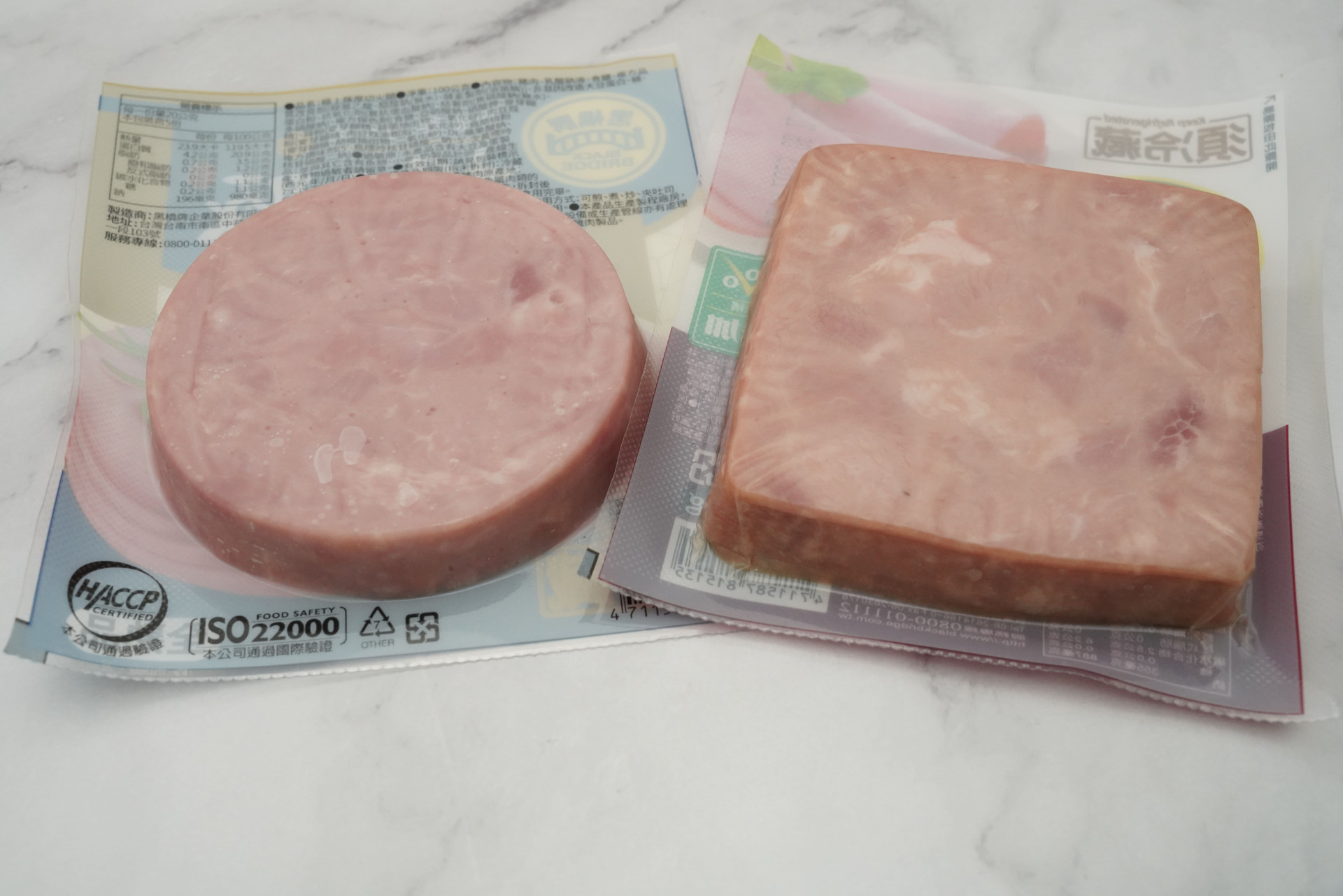
High Barrier NY(PA)/EVOH Multilayer Film F1154 (150μm)
NLB 150 (NY/EVOH/PE) thermoforming film with the highest oxygen barrier and heaviest gauge in the NLB series, built for the deepest forming depths in deep vacuum thermoforming packs of frozen meat and ready-to-eat products.
Heaviest-Gauge Barrier Film for Deep Vacuum Thermoforming Packs
F1154 (NLB #150) is the heaviest, highest-barrier grade in the NLB series. At 150μm it is engineered for the deepest forming depths — 40 to 50mm — so the film can stretch around irregular product shapes without failing in deep vacuum Thermoforming packs. Its 0.31 cc/m²·24hr oxygen transmission rate is the lowest in the family, and the heavier gauge still holds strong transparency and gloss.
Where F1154 Is Used
- 1
Deep Vacuum Thermoforming Packs
Deep vacuum thermoforming packs requiring a 40–50mm forming depth — the deepest in the NLB series. A 6400/6000 kg/cm² modulus, the highest of the family, holds that cavity without collapsing; nylon (PA) supplies the draw strength and the EVOH core the barrier.
- 2
Frozen Food Long-Term Storage
Vacuum packaging film for room-temperature, refrigerated, and especially frozen food. At 0.31 cc/m²·24h oxygen and 5.1 g/m²·24h water vapour, this is the tightest barrier Intlpak publishes in a transparent forming film.
- 3
Highest Barrier MAP Packaging
Vacuum, deoxygenation, and Modified Atmosphere Packaging of beef, chicken, pork, seafood, livestock, and agricultural products. Where the shelf-life target is set by the material rather than the process, F1154 is the ceiling.
- 4
Cured and Ready-to-Eat Meat Packs
Packaging of ready-to-eat products such as dried meat, sliced ham, pastry, and beef jerky. At 15% haze it is clearer than the 139μm grade despite being thicker — haze follows layer structure, not gauge.
Full Specifications — High Barrier Nylon/PE Film Series
F1154 is the 150μm grade in Intlpak's NLB high barrier NY/EVOH/PE thermoforming film family — the heaviest gauge and highest oxygen barrier in the series, a 150 micron deep-draw nylon film with a measured oxygen transmission rate (OTR) of 0.31 cc/m²·24h, a water vapour transmission rate (WVTR) of 5.1 g/m²·24h, 15% haze, and a suggested forming depth of 40–50mm. The table below shows F1154 alongside its 80μm and 139μm siblings for reference.
| Property | Standard | Unit | F1127 (80μm) | 15N01 (139μm) | F1154 (150μm) |
|---|---|---|---|---|---|
| Thickness | — | μm | 80 | 139 | 150 |
| Yield Point (MD) | ASTM D882 | kg/cm² | 200 | N/A | 230 |
| Yield Point (TD) | ASTM D882 | kg/cm² | 180 | N/A | 240 |
| Break Point (MD) | ASTM D882 | kg/cm² | 500 | N/A | 540 |
| Break Point (TD) | ASTM D882 | kg/cm² | 460 | N/A | 570 |
| Elongation (MD) | ASTM D882 | % | 400 | N/A | 540 |
| Elongation (TD) | ASTM D882 | % | 400 | N/A | 500 |
| Tensile Modulus 2% (MD) | ASTM D882 | kg/cm² | 4400 | 5000 | 6400 |
| Tensile Modulus 2% (TD) | ASTM D882 | kg/cm² | 4400 | 5000 | 6000 |
| Static C.O.F. (untreated) | ASTM D1894 | kg/200g | 0.10 | 0.10 | 0.10 |
| Kinetic C.O.F. (untreated) | ASTM D1894 | kg/200g | 0.10 | 0.10 | 0.10 |
| Haze | ASTM D1003 | % | 10 | 20 | 15 |
| Oxygen Transmission Rate | ISO 14663-2 | cc/m²·24h, atm, 20°C, 65% RH | 0.8 | 0.5 | 0.31 |
| Water Vapor Transmission Rate | ASTM E96-E | g/m²·24h, 40°C, 90% RH | 9.4 | 5 | 5.1 |
| Suggested Forming Depth | — | mm | 15 | 10–30 | 40–50 |
| Width | — | — | Customized | ||
| Length | — | — | Customized | ||
Reviewed by: Intlpak R&D Team.
Why F1154 Performs
Storage Notice
Avoid exposure to direct light, wind, and rain — store under appropriate conditions. Prevent products from slipping from high places, being polluted, or being impacted during handling.
Quality & Certification
Manufactured under ISO 9001 quality management and GMP clean-room production, with ISO 22000 & HACCP food-safety certification. All products undergo annual safety checks.
Questions About F1154
F1154 forms 40–50 mm — which products genuinely need that?
Irregular, bulky items — bone-in cuts, large cheese blocks, three-dimensional prepared foods. Deep vacuum thermoforming packing asks the film to conform to a product's contour without failing, and that is what 150 μm and a 6400 kg/cm² MD modulus are for. Flat sliced product runs perfectly well on F1127 or 15N01 ; specifying F1154 there is cost without benefit.
F1154's OTR of 0.31 is the series low — what shelf life does that support?
0.31 cc/m²·24h (20°C, 65% RH) is the top of this family and supports frozen and extended-chilled distribution when combined with vacuum or MAP. Shelf life cannot be derived from OTR alone, though — water activity, initial microbial load, cold-chain temperature and pack integrity all contribute, so run real shelf-life trials before printing a date.
F1154 is only 11 μm thicker than 15N01 — why the large jump in forming depth?
Stiffness, not gauge, is doing the work. F1154 measures 6400/6000 kg/cm² MD/TD tensile modulus against 15N01 's 5000/5000, with elongation of 540%/500%. Higher modulus means the web resists localized thinning during deep draw and holds gauge at the corners, and that is what sets achievable depth.
Is F1154 suitable for frozen packs — does it embrittle at low temperature?
It is, and frozen distribution is one of its main applications. Nylon retains toughness at low temperature, which is why this structure is specified for freezer chains; paired with 540%/500% elongation, packs absorb impact during frozen handling rather than splitting. For extreme temperatures or rough handling, validate with drop testing on your actual pack.
F1154's haze of 15% is below 15N01 but above F1127 — how should I read that?
As two effects pulling against each other. On gauge alone the thickest film should be the haziest, but F1154's formulation reads better optically than 15N01 at 20%, landing it in the middle. Practically: among the three deep-draw grades F1154 combines the deepest draw, the best barrier and upper-mid clarity, with only F1127 ahead of it on transparency alone.
What is the longest shelf life achievable on a thermoformed vacuum pack?
Within Intlpak's NY/EVOH/PE range the barrier ceiling is F1154: an OTR of 0.31 cc/m²·24h and a WVTR of 5.1 g/m²·24h at 150 μm, together with the deepest forming depth in the series at 40–50 mm. Shelf life also depends on the product, the pack format and storage temperature, so treat the OTR as the limit the material sets rather than a guaranteed date.
Does a deep tray need a deep-draw film on both sides of the pack?
No — only the forming web is drawn. The bottom film takes the full cavity depth and thins at the corners; the top film is a lidding or sealing web and stays flat. F1154 is a forming grade rated 40–50 mm, with the series' highest modulus at 6400/6000 kg/cm² to hold that depth. Pair it with a sealing film suited to the opening method you need.