Product Photo
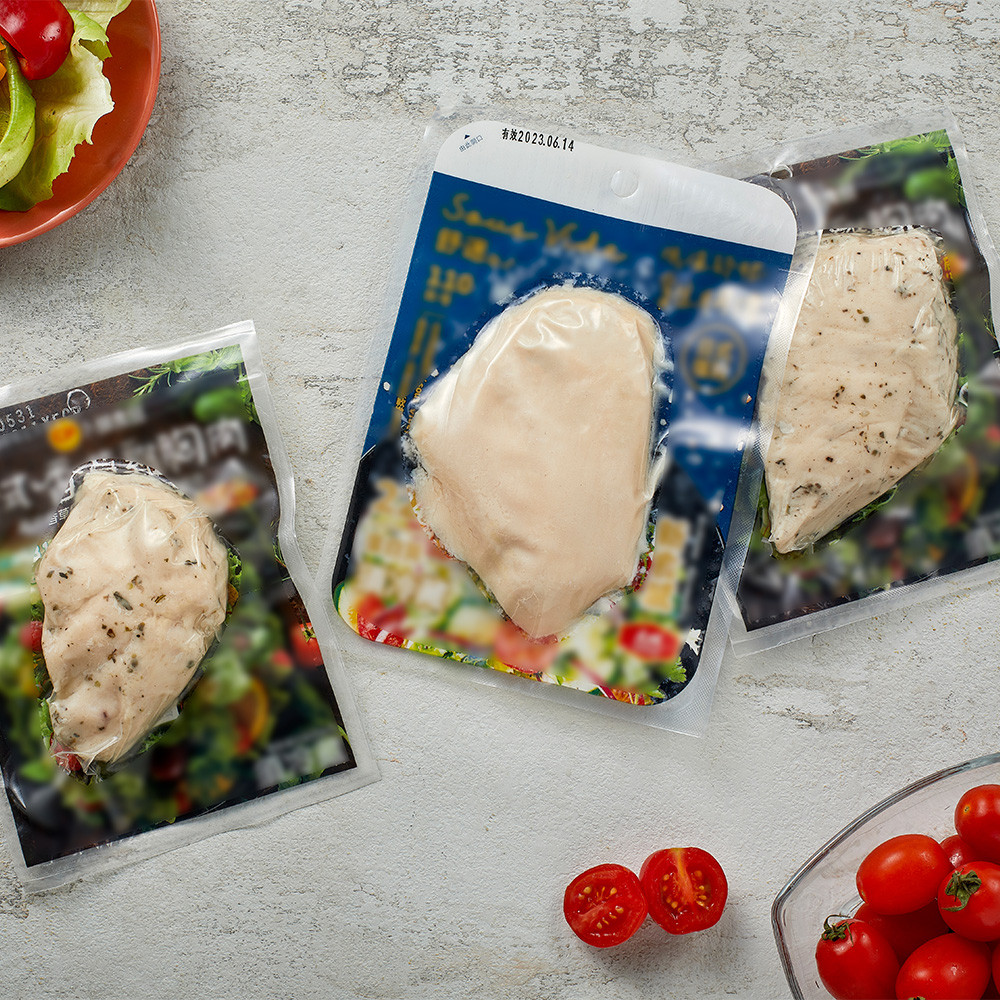
Nylon (PA)/Retort CPP Thermoforming Film F2235 (135μm)
NY/RCPP 135 thermoforming film used as a sealing film on continuous automatic vacuum thermoforming lines, built to withstand high-temperature retort sterilization and sous-vide cooking. Forms a durable vacuum bag for chicken, ham, sausage, bacon, duck, meat, and seafood.
A Retort-Grade Sealing Film for High-Temperature Sterilization
F2235 goes beyond standard refrigerated vacuum packing: at 135μm it is engineered to withstand high-temperature retort sterilization and sous-vide cooking as well as room-temperature, refrigerated, and frozen vacuum packaging, at a suggested 30–50mm forming depth. It holds the nylon range's formability and pinhole-free twist resistance, so packs stay clear and retail-ready through the added stress of thermal processing.
Where F2235 Is Used
- 1
Ambient, Chilled and Frozen Packs
Vacuum packaging film for room temperature, refrigerated, and frozen food. The RCPP sealant layer is what allows the same pack to cover ambient shelf-stable products as well as chilled and frozen.
- 2
Fresh Meat and Sausage Packaging
Fresh beef, chicken, pork, seafood, sausage, and fresh meat products. At 135μm with a 30–50mm forming depth and 7% haze, the pack holds shape and stays visible.
- 3
High-Temperature Retort Sterilization
High-temperature retort food sterilization. Heat resistance to 135°C means the food can be cooked and sterilized inside the sealed pack — ordinary nylon (PA) forming films soften or delaminate at those temperatures.
- 4
Sous-Vide Ready Meal Packaging
Sous-vide packaging. The nylon face is corona treated for print and lamination, so a cook-in pack can also carry retail graphics without a separate outer sleeve.
Specifications — Nylon/Retort CPP Thermoforming Film Family
F2235 is the 135μm grade in Intlpak's NY/RCPP retort thermoforming film family — a 135 micron NY/RCPP retort thermoforming film rated to 135°C for a 30–50mm forming depth, with 7% haze and a corona-treated nylon surface, built for retort sterilization and sous-vide cooking. The table below shows F2235 alongside the 150μm sibling grade, F2237.
| Property | Standard | Unit | F2235 (135μm) | F2237 (150μm) |
|---|---|---|---|---|
| Thickness | — | μm | 135 | 150 |
| Yield Point (MD) | ASTM D882 | kg/cm² | 200 | 200 |
| Yield Point (TD) | ASTM D882 | kg/cm² | 170 | 180 |
| Break Point (MD) | ASTM D882 | kg/cm² | 400 | 450 |
| Break Point (TD) | ASTM D882 | kg/cm² | 350 | 400 |
| Elongation (MD) | ASTM D882 | % | 400 | 400 |
| Elongation (TD) | ASTM D882 | % | 330 | 400 |
| Tensile Modulus 2% (MD) | ASTM D882 | kg/cm² | 3500 | 5000 |
| Tensile Modulus 2% (TD) | ASTM D882 | kg/cm² | 3500 | 4000 |
| Static C.O.F. (untreated) | ASTM D1894 | kg/200g | 0.40 | 0.60 |
| Kinetic C.O.F. (untreated) | ASTM D1894 | kg/200g | 0.35 | 0.45 |
| Haze | ASTM D1003 | % | 7 | 8 |
| Suggested Forming Depth | — | mm | 30–50 | |
| Heat Resistance | — | °C | Up to 135 | |
| Corona-Treated Surface | — | — | Nylon side | |
| Structure | — | — | NY/RCPP | |
| Retort / Sous-Vide Suitable | — | — | Yes | |
| Formability & Optics | — | — | Best formability, resistance to twists without pinholes, high transparency, high gloss, good gas barrier properties | |
| Width | — | — | Customized | |
| Length | — | — | Customized | |
Detailed mechanical values (yield/break point, elongation, tensile modulus, C.O.F., haze) are available on request — contact our engineers for the full technical data sheet.
Reviewed by: Intlpak R&D Team.
Why F2235 Performs
Storage Notice
Avoid exposure to direct light, wind, and rain — store under appropriate conditions. Prevent products from slipping from high places, being polluted, or being impacted during handling.
Quality & Certification
Manufactured under ISO 9001 quality management and GMP clean-room production, with ISO 22000 & HACCP food-safety certification. All products undergo annual safety checks.
Questions About F2235
F2235 and F2237 both form 30–50 mm — what does the gauge difference buy?
Material margin and cavity rigidity, not extra depth. F2235 is 135 μm and F2237 is 150 μm, both covering the same 30–50 mm range. Choose F2237 for heavier contents, sharper product geometry, or where the tray must hold its shape; for ordinary prepared foods F2235 does the job at lower material cost.
What sterilization can F2235 take?
High-temperature retort processing. The RCPP layer in the structure is developed specifically for retort service, so a formed pack can go directly into the retort, while the film also serves ambient, chilled and frozen distribution and suits sous-vide. Validate your exact temperature and dwell with sample material, and request matching seal-strength data from our engineers.
If I'm not sterilizing, is F2235 wasted?
Usually, yes. Chilled or frozen vacuum packs need no retort layer, and a nylon grade such as F2606 (150 μm, 40–50 mm) costs less and reads clearer. F2235's value is the ability to sterilize after forming — if you never use it, there is no reason to pay for it.
Is F2235 the top or bottom web?
Bottom web. On automatic thermoforming machinery it is heated and formed into the food-carrying tray, then sealed to a top web under vacuum, after which the pack can go straight to high-temperature sterilization. Typical uses are retort meals, sous-vide dishes and ambient-distributed ready meals.
Why aren't haze and elongation published for F2235?
Full mechanical data for this SKU is not yet part of the published technical data sheet, so the page lists only confirmed thickness, forming depth and retort capability. We don't fill the gaps with estimates — for yield and break point, elongation, haze and the rest, request the technical data sheet from our engineering team.
Can one pack go through sous-vide cooking and still be the retail pack?
That is what a retort-capable thermoforming film is for. F2235 is the 135 μm NY/RCPP grade, heat resistant to 135°C and rated for a 30–50 mm forming depth, so the food can be cooked in the sealed pack and sold in it. At 7% haze the contents stay visible. The nylon face is corona treated for print and lamination.
Retort pouch or thermoformed retort pack — which should we run?
A pouch is bought pre-made and filled; a thermoformed pack is drawn on your own line from rollstock, which lowers material cost per pack and lets you change cavity size without new bags. Both must survive sterilization. F2235 is rated to 135°C at a 30–50 mm draw; for pouches, Intlpak's RCPP sealant films such as F4513 are the equivalent layer.