Product Photo
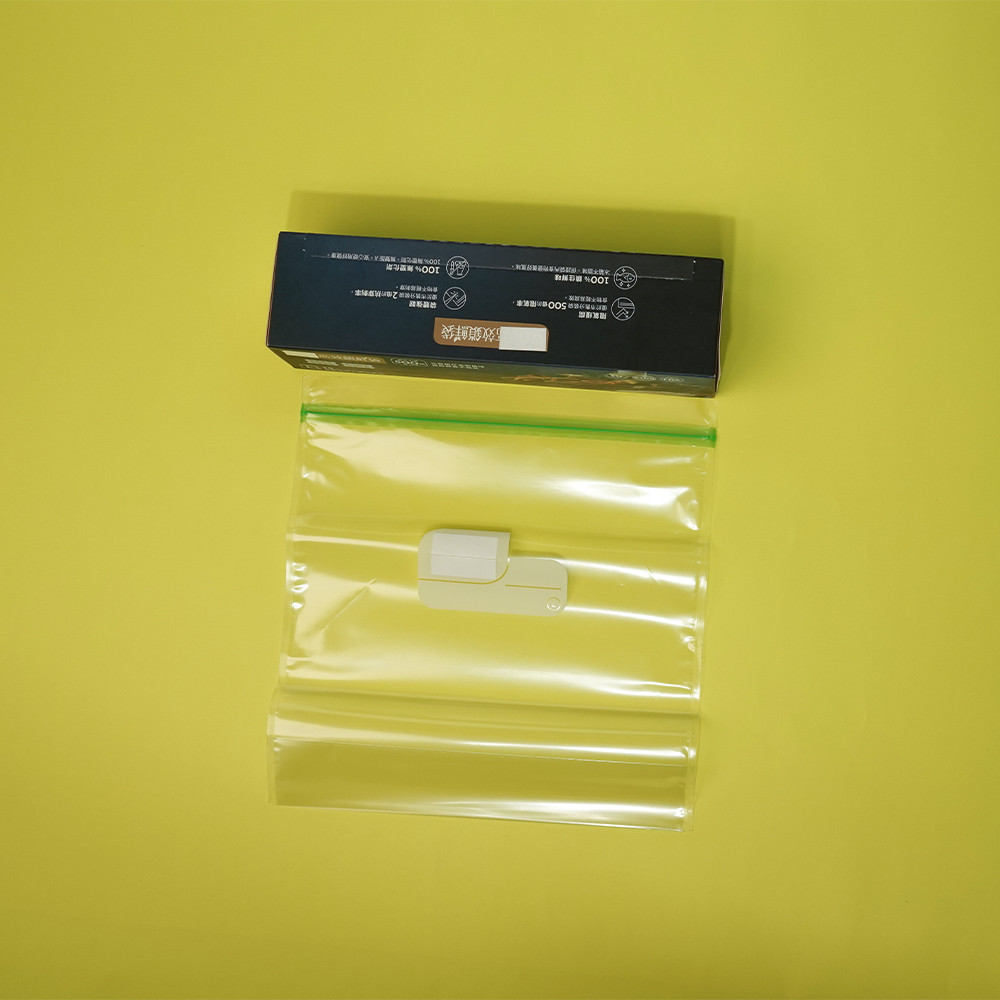
High Barrier PP/EVOH/PP Film F1355 (55μm)
PVP 55 coextrusion film with high oxygen barrier, exceptional elongation, and transparency. Corona-treated on one side for lamination with PET, OPP, or NY into food, medical, and cosmetics packaging structures.
Heavier-Gauge PP Film With Exceptional Stretch
F1302 (PVP #40) is the lightest-gauge entry point in Intlpak's PVP high-barrier PP family. Using a PP layer in place of PE gives this line notably higher elongation and toughness than the PE/EVOH/PE (EVE) series at an equivalent gauge, while the EVOH core carries the oxygen barrier and fragrance retention.
Where F1355 Is Used
- 1
Food, Cosmetics and Hygiene Packs
Food, medical care, cosmetics, and hygienic cleaning product packaging. The 55μm mid-gauge in the PP/EVOH/PP family, reading 2.6 cc/m²·24h oxygen transmission and 7% haze.
- 2
High Stretch with Oxygen Protection
Applications needing high stretch and formability alongside oxygen-barrier protection. F1355 elongates 700% in both directions against F1302's 600%, at the same 2.6 cc/m²·24h — extra stretch without changing the barrier figure.
- 3
Printing, Lamination and Web Handling
Can be printed or laminated with other film materials. The two faces differ sharply in friction — 1.30 static on the corona-treated side against 0.15 untreated — so which face runs against the machine changes how the web tracks.
- 4
MAP Packs for Fresh Proteins
Modified Atmosphere Packaging of fresh beef, chicken, pork, and seafood products. The higher elongation matters where the film is drawn or stretched over an uneven cut before sealing rather than laid flat.
Full Specifications — High Barrier PP Film Series
F1355 is the 55μm grade in Intlpak's PVP high barrier PP/EVOH/PP film family — a 55 micron high barrier film with a measured oxygen transmission rate (OTR) of 2.6 cc/m²·24h, 7% haze, and 700% elongation. The table below shows F1355 alongside its 40μm and 70μm siblings for reference.
| Property | Standard | Unit | F1302 (40μm) | F1355 (55μm) | F1307 (70μm) |
|---|---|---|---|---|---|
| Thickness | — | μm | 40 | 55 | 70 |
| Yield Point (MD) | ASTM D882 | kg/cm² | 200 | 190 | 180 |
| Yield Point (TD) | ASTM D882 | kg/cm² | 190 | 190 | 180 |
| Break Point (MD) | ASTM D882 | kg/cm² | 400 | 400 | 400 |
| Break Point (TD) | ASTM D882 | kg/cm² | 380 | 350 | 350 |
| Elongation (MD) | ASTM D882 | % | 600 | 700 | 700 |
| Elongation (TD) | ASTM D882 | % | 600 | 700 | 700 |
| Tensile Modulus 2% (MD) | ASTM D882 | kg/cm² | 5000 | 4300 | 4200 |
| Tensile Modulus 2% (TD) | ASTM D882 | kg/cm² | 4800 | 4300 | 4000 |
| Static C.O.F. (treated) | ASTM D1894 | kg/200g | 0.10 | 1.30 | 0.25 |
| Static C.O.F. (untreated) | ASTM D1894 | kg/200g | 0.08 | 0.15 | 0.20 |
| Kinetic C.O.F. (treated) | ASTM D1894 | kg/200g | 0.07 | 1.20 | 0.15 |
| Kinetic C.O.F. (untreated) | ASTM D1894 | kg/200g | 0.05 | 0.10 | 0.15 |
| Haze | ASTM D1003 | % | 5 | 7 | 6 |
| Oxygen Transmission Rate | ISO 14663-2 | cc/m²·24h, atm, 20°C, 65% RH | 2.6 | 2.6 | 2.6 |
| Water Vapor Transmission Rate | ASTM E96-E | g/m²·24h, 40°C, 90% RH | 6.5 | 5.1 | 3.7 |
| Width | — | — | Customized | ||
| Length | — | — | Customized | ||
Reviewed by: Intlpak R&D Team.
Why F1355 Performs
Storage Notice
Avoid exposure to direct light, wind, and rain — store under appropriate conditions. Prevent products from slipping from high places, being polluted, or being impacted during handling.
Quality & Certification
Manufactured under ISO 9001 quality management and GMP clean-room production, with ISO 22000 & HACCP food-safety certification. All products undergo annual safety checks.
Questions About F1355
F1355 sits at 55 μm between the 40 and 70 — when should I pick it?
When you need better moisture protection than F1302 provides but don't want to pay for F1307 's gauge. Oxygen barrier is identical across all three at OTR 2.6; the difference is WVTR, and F1355's 5.1 g/m²·24h lands squarely between 6.5 and 3.7 — the moisture-versus-cost compromise.
F1355 elongates 700%/700%, the same as the 70 μm grade — so is gauge pointless?
For elongation, it has already topped out. F1355 matches F1307 at 700%/700%, both above F1302 's 600%/600%, meaning toughness reaches the family ceiling at 55 μm and does not improve further. What F1307's extra gauge buys is moisture barrier (3.7 versus 5.1) and thickness margin, not extensibility.
F1355's yield point of 190 falls between its siblings — is that gap meaningful on the line?
Barely. The three read 200 ( F1302 ), 190 (F1355) and 180 ( F1307 ) kg/cm² — under 10% spread, which rarely warrants a settings change. The differences worth planning around are the heat-seal parameters that follow from gauge, and the WVTR tiers.
Can F1355 be printed or laminated?
Yes, exactly as the rest of the family. The PP layers supply heat tolerance and print compatibility while the EVOH core carries oxygen barrier and aroma retention. It prints directly and laminates to PET, OPP or NY for composite structures across food, medical care, cosmetics and hygienic products.
Is 7% haze clear by the standards of this PP family?
Middle of the pack, and in fact the haziest of the three: F1302 (40μm) measures 5%, F1355 (55μm) measures 7%, and F1307 (70μm) measures 6% — haze doesn't decrease steadily with thickness in this family, the middle grade runs highest, most likely tied to how the PP layers crystallize at that particular gauge. The spread is only 2 points, so the practical visual difference between all three is slight; if clarity is the deciding factor, the PE/EVOH/PE family at 4.2–5.6% remains the meaningfully clearer tier.
Our film slips on the roll and the web wanders — can the film itself be part of the fix?
Yes. Surface friction is a published property, and it differs sharply between the two faces. F1355 reads a static coefficient of friction of 1.30 on the corona-treated side against 0.15 untreated — the widest split in Intlpak's PP/EVOH/PP range. If the web is sliding where it should grip, or dragging where it should slide, check which face is running against the machine before changing tension.
We need more stretch during forming without losing oxygen protection — is that a trade-off?
Not within this family. All three PP/EVOH/PP grades read the same OTR of 2.6 cc/m²·24h, so elongation can be chosen independently. F1355 elongates 700% in both directions against F1302's 600%, at 55 μm rather than 40 μm. Where forming or stretch is the constraint rather than barrier, the heavier grade buys elongation without changing the oxygen figure.